

Digital branding has become a buzzword in Nepal, but very few businesses use it correctly. Most companies create a website, open a few social media accounts, and expect everything to magically work. But real branding takes clarity, consistency, and a long-term approach.
After working with Nepali startups, agencies, and established businesses, here are some of the most common digital branding mistakes we see and how to avoid them.
1. Treating Branding as a One-Off Project
Many Nepali businesses believe branding ends when the logo is ready or the website launches. The reality is very different: your brand is shaped continuously by every blog post, customer interaction, and update.
Data point: Nepal’s internet penetration rate is about 55.8%, with approximately 16.5 million internet users. This means many Nepali customers are online and your brand needs to stay visible and relevant to reach them. (DataRePortal)
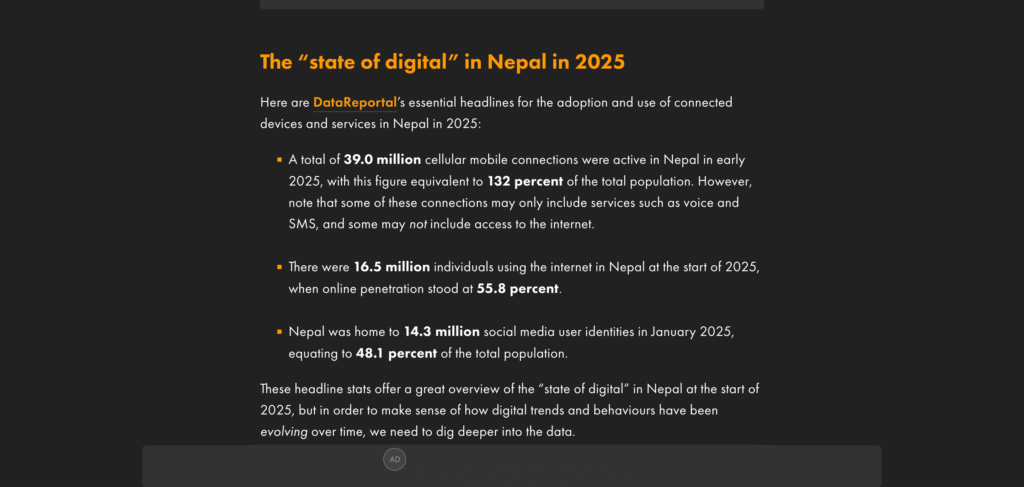
Digital 2025: Nepal data by https://datareportal.com/
How to Fix It:
- Maintain a regular content calendar.
- Revisit and update your brand identity every 6–12 months.
- Use customer feedback to refine your messaging over time.
2. Focusing Only on the Logo
In Nepal, “branding” is often reduced to logo design but a strong brand is more than just a symbol. It includes color schemes, typography, imagery, tone of voice, and the overall user experience.
How to Fix It:
- Create a full brand identity system (colors, fonts, image style).
- Develop a messaging guide that aligns with your company values and mission.
- Apply this identity consistently across your website, social media platforms, and any printed material.
3. No Consistent Brand Voice
One of the biggest mistakes is lacking a unified tone across platforms. For example, the voice on a company’s website might be formal, while their social media content is casual and their email communications feel robotic.
How to Fix It:
- Choose a tone that matches your brand: friendly, confident, serious, or minimal.
- Develop a voice guide for all written communication (blogs, emails, social media).
- Train your team or content partners to use that voice consistently.
4. Weak or Mobile-Unfriendly Website
Even though most Nepali internet users access the web via smartphones, many company websites are not optimized for mobile. Slow loading times, poorly placed buttons, and unresponsive layouts frustrate users and reduce engagement.
How to Fix It:
- Design mobile-first.
- Test on real devices with different screen sizes.
- Compress images and reduce heavy animations.
5. Slow Website Performance
A slow-loading website damages your brand perception and hurts SEO. Common causes include unoptimized images, heavy plugins, and low-quality hosting.
How to Fix It:
- Use quality hosting and enable a CDN.
- Compress and convert images to modern formats like WebP.
- Audit plugins and remove unused ones.
- Implement caching and minify CSS/JS.
6. Undefined Target Audience
Many Nepali businesses still operate with a vague “everyone is our customer” mindset. Without a clear audience, your branding lacks direction and fails to resonate.
How to Fix It:
- Define buyer personas (age, interests, challenges, goals).
- Adjust your messaging, website, and content to speak directly to those personas.
- Test your messaging through ads or content, and refine based on what works.
7. Neglecting SEO & Organic Growth
Some Nepali companies over-rely on paid promotions while ignoring long-term organic growth. SEO is not only affordable but also highly effective.
Data point: According to research, while many Nepali enterprises recognize the importance of digital marketing, only around 45% are actively using it to grow their business.
How to Fix It:
- Create content around relevant local keywords.
- Optimize meta titles, descriptions, headings, and URLs.
- Link internally between pages and use schema markup.
- Track your SEO performance using Google Analytics and Search Console.
8. Posting Irrelevant or Inconsistent Social Media Content
Posting festival greetings, generic quotes, or stock photos doesn’t build a brand, it just fills a feed. To build real value, your content needs to educate, engage, or inspire.
How to Fix It:
- Develop a social content strategy aligned with your brand voice.
- Share behind-the-scenes, case studies, and customer stories.
- Use formats like video, infographics, or blog summaries.
- Encourage engagement by asking questions, running polls, or sharing insights.
9. Copying Competitors Blindly
Many Nepali businesses fall into the trap of mimicking competitors using similar websites, layouts, color schemes, or content styles. While imitation feels safe, it undermines uniqueness.
How to Fix It:
- Define your unique value proposition (UVP), what makes you different.
- Use customer interviews or surveys to uncover what sets your brand apart.
- Design your brand identity and messaging around your UVP.
10. Undervaluing Professional Expertise
Some businesses hire the cheapest designer or use budget freelancers who don’t understand long-term branding. This often results in a brittle, forgettable brand that needs rework down the road.
How to Fix It:
- Hire experienced professionals who understand both design and strategy.
- Prioritize quality over low cost for branding assets like websites, identity systems, and content.
- Ask for case studies or portfolios before hiring a partner.
11. Overlooking Trust & Credibility Signals
Brand trust is not built on flashy design alone, it’s earned through credibility markers like testimonials, case studies, and clear team information.
How to Fix It:
- Showcase client testimonials and case studies.
- Use trust badges (SSL, certifications) on your website.
- Put your team on your “About” page, with real photos and bios.
- Share real metrics or success stories when possible.
12. Poor Content Strategy
Without a content plan, many Nepali businesses publish infrequently or share irrelevant blog content, which means they miss out on building expertise and SEO traction.
How to Fix It:
- Build a content calendar with thought leadership, how-to guides, and customer stories.
- Focus on topics relevant to your audience’s problems.
- Repurpose content for newsletters, social media, and downloadable resources.
- Analyze traffic and engagement metrics to refine your strategy.
13. Ignoring Analytics & Data
Without tracking performance, it’s impossible to improve. Many Nepali companies use Google Analytics or social media insights poorly or not at all.
How to Fix It:
- Set up analytics tools (Google Analytics + Search Console).
- Monitor metrics: traffic sources, bounce rates, conversions.
- Use insights to adjust your website, content, and marketing.
- Run A/B tests on headlines, CTA buttons, or landing pages.
14. Over-Reliance on Third-Party Platforms
While Facebook, Instagram, and other platforms are important, relying solely on them is risky. Algorithms change, reach fluctuates, and you don’t own your audience.
How to Fix It:
- Build your own platforms: website, blog, or newsletter.
- Grow an email list for direct communication with your audience.
- Use social media as a channel, not your core asset.
Digital branding has basically become a must-have now. If a Nepali company wants to stay visible and trusted, its online presence needs to be clear, consistent, and actually useful. But the reality is… many businesses still repeat the same mistakes – scattered branding, websites that feel slow or outdated, weak SEO, and messaging that doesn’t say anything meaningful.
Once you understand where things are going wrong, fixing them becomes much easier. A clear brand voice, a site that works smoothly on mobile, better speed, and a simple long-term content plan can completely change how people see your brand. When these basics are right, your digital presence starts supporting your growth instead of holding you back.